
Effective Vegan Advocacy
Online Course
Learn to open hearts and minds as a vegan advocate.
Scroll down to learn more about our sliding scale for fees.

Is your vegan advocacy having the greatest possible impact?
Have you ever started talking with a nonvegan about eating animals—or simply mentioned that you’re vegan—and felt a wall of defensiveness come up? Many vegans have had this experience.
When we’re advocating veganism, we’re advocating moral consistency, compassion, and health—values that most people share. Yet when we talk about veganism, many people respond negatively.
The good news is that it is possible to approach conversations about veganism in a productive way that increases the chances that people will hear your message the way that you intend it to be heard.
How this course can help you
This course is an engaging and immersive learning experience that will help you develop the skills to talk about veganism in a way that reduces resistance to your message.
You’ll learn a wide range of practical tools and strategies for effective communication that can make your conversations about veganism healthier and more impactful. You’ll come to better understand the psychology of eating animals, helping you avoid getting stuck in unproductive debates. And you’ll discover techniques for creating a sense of connection when discussing veganism in order to reach mutual understanding.
By learning the evidence-based approaches in this online course, you can significantly increase the effectiveness of your vegan advocacy.
Developed by leaders and educators with decades of experience in animal advocacy, this course features short, engaging videos accompanied by activities and resources to help you deepen your learning.

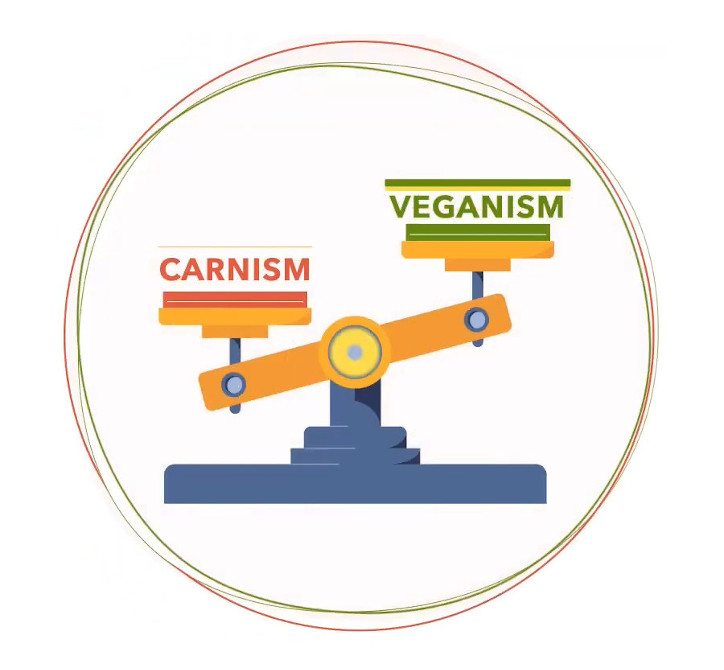
What we’ll cover
- The four key obstacles to effective vegan advocacy
- The psychology of eating animals—and how it influences your interactions with nonvegans
- What relational literacy is and why it’s important
- The key principles of effective communication
- How to create a sense of connection while advocating veganism
- How to use language effectively when discussing veganism
- And much more!
Who will benefit from taking this course?
- Vegan advocates and other vegans who find that their conversations about veganism aren’t as productive as they would like them to be
- Vegans who are passionate about the cause but need guidance on how to advocate veganism effectively
- Advocates working with vegan groups or organizations—including leaders, other team members, and volunteers—who want to improve their advocacy skills in order to increase their impact

Course Curriculum
Getting Started

Welcome: Starter Pack
Effective Vegan Advocacy: Exercises and Resources
Pre-course Survey
Effective Vegan Advocacy
Video 1: Your Experience Advocating Veganism [1:04]
Video 2: What Is Effective Vegan Advocacy? [0:38]
Video 3: Four Key Obstacles to Effective Vegan Advocacy [1:40]
Video 4: Know Your Audience: Understand Carnism [5:12]
Video 5: Know When Not to Advocate [3:08]
Video 6: Develop Relational Literacy [3:34]
Video 7: Focus on Process over Content [3:04]
Video 8: Don’t Expect the Facts to Sell the Ideology [2:03]
Video 9: Highlight Common Ground [2:47]
Video 10: Share Your Own Story [2:55]
Video 11: Illuminate Carnistic Defenses [2:36]
Video 12: Don’t Overinform [1:17]
Video 13: Focus on the Positive [3:04]
Video 14: Avoid Reductive Thinking [3:09]
Video 15: View Nonvegans as Potential Allies [2:04]
Video 16: Avoid “Carnistic Trigger” Words [1:44]
Video 17: Say “I Don’t Know” [2:17]
Video 18: Avoid All-or-Nothing Thinking [2:50]
Video 19: Know There Is Reason to Hope [2:17]
Final Reflection and Next Steps
Your instructor
Dr. Melanie Joy
Dr. Melanie Joy is a psychologist, educator, and international speaker. She is the author of seven books, including the award-winning Why We Love Dogs, Eat Pigs, and Wear Cows; Beyond Beliefs: A Guide to Improving Relationships and Communication for Vegans, Vegetarians, and Meat Eaters; Getting Relationships Right; Strategic Action for Animals; The Vegan Matrix, and How to End Injustice Everywhere. Melanie has developed and implemented advocacy trainings for over a decade, and she specializes in strategic vegan advocacy; effective communication; resilient teams and leadership; inclusivity and diversity; relational literacy; the psychology of social transformation; and sustainable advocacy. She is the eighth recipient of the Ahimsa Award—previously given to the Dalai Lama and Nelson Mandela—for her work on global nonviolence, and she is the founding president of Beyond Carnism.

What people are saying
“The skills gained in this course can be immediately applied to all types of advocacy in your life, from casual interactions with strangers to meaningful discussions with family. If you want to know how to get results with your vegan advocacy, then register for this course. Moreover, these skills can be applied to non-advocacy interpersonal communication too!”
“This course is the best resource I know of for vegans who want to be effective one-to-one advocates. It is firmly rooted in psychological science but is presented in an accessible and engaging way. Dr. Joy doesn’t shy away from difficult topics, covering them with compassion, understanding, and empathy toward all animals—nonhuman and human alike. I highly recommend this course!”
“The Effective Vegan Advocacy online course from CEVA is packed with tools to help vegans increase the impact of their outreach. The course will help you avoid getting stuck in unproductive conversations about veganism and increase the chances that you’ll have healthy and productive discussions. I recommend it to anyone who wants to take their vegan advocacy to the next level.”
Pricing Options

$25
Fee for course
This is the full price fee for the course
At CEVA, we are committed to providing high-quality training resources for advocates around the world, no matter their circumstances. This is why we have developed an inclusive pricing structure for this course.
Discounted fee options:
- 50% off (coupon code: HALFOFF)
- Free (coupon code: FREE)
We encourage you to choose the fee that is affordable for you. By making a contribution, you will enable us to provide more courses like this one for more advocates.
- If you have any questions about our pricing, please contact info@veganadvocacy.org
Frequently Asked Questions
How much time will I need to dedicate to the course?
The course consists of 31 short videos, which take just over 1 hour in total to watch. The time you’ll need to complete each learning activity will vary. Some activities can be completed in several minutes, while others may take an hour or longer, depending on how much you’d like to engage with the material. Throughout the course, we also recommend that you check out additional resources, so you might want to factor in some extra time for doing so.
In order for you to get the most out of the course, we recommend that you pace yourself as you progress through the video content and allow time to fully engage with the reflection activities. The reflection activities are designed to deepen your understanding and also to help you consider what steps you might take to make your advocacy more effective.
Can I complete the course in my own time?
Yes. You can access the course anytime, anywhere, and work through it at your own pace.
Some people find that setting themselves a goal of completing the course within a certain time frame helps them stay on track, but we encourage you to pace yourself and give yourself time to fully process an exercise before moving on to the next video. This could take hours or even days.
Can I retake the course?
Yes. You will have lifetime access to the course.
Will I receive proof of having completed the course?
Yes. All participants who complete the course will receive a certificate issued by CEVA.
I’ve previously attended an in-person CEVA training. Will I still benefit from this course?
There is some overlap between the content of this course and CEVA’s in-person training. However, this course contains updated content, as well as additional learning activities and resources, so previous attendees will learn more techniques to help them advocate sustainably.
What does CEVA mean by “effective”?
CEVA uses the term “effective” for two reasons. Effectiveness reflects our focus, and it informs which methods we recommend.
We focus primarily on results. This means, for instance, that we may advocate using messages other than “go vegan” if there is reason to believe that those messages will lead to swifter and more sustainable change (as long as these messages don’t reinforce other problems or forms of oppression). Furthermore, much of our focus is on process, not content. We are not simply promoting one strategy or another but rather encouraging advocates to ask questions and approach issues in a way that increases the chances that they will make effective decisions when promoting veganism—decisions that will do the most good. We seek to enhance strategic thinking, not simply to discuss which specific strategies may be most effective.
The methods we recommend are, whenever possible, based on empirical evidence, as well as on our experience as vegan advocates. Melanie Joy has extensively researched strategic methods for social change and authored books covering vegan strategy, effective communication, and social change. Furthermore, she holds a PhD in psychology and specializes in the psychology of social transformation and in relational literacy. She has consulted for vegan organizations around the world and has a strong track record of success.
How does CEVA try to ensure that its courses are appropriate for all cultures?
We recognize that our approach to advocating veganism inevitably reflects our worldviews, and we take measures to ensure that we’re not promoting methods that simply reflect our own norms or biases.
We have delivered in-person trainings around the world, working closely with members of vegan organizations in local communities who have provided us with feedback and guidance. We try to ensure that the research on which we base the methods we advocate is as culturally diverse as possible. And we have found that the vast majority of the issues we discuss and the challenges vegan advocates face are similar across cultures.
How does CEVA address inclusivity?
We are aware that systemic oppression and unexamined privilege—white, male, etc.—is a serious problem in the vegan movement and beyond, and that this problem both enables unethical practices and damages the effectiveness of the vegan movement. Melanie Joy has written a book on this issue, The Vegan Matrix: Understanding and Discussing Privilege Among Vegans to Build a More Inclusive and Empowered Movement. Furthermore, we are committed to ongoing development of our own self-awareness and education in this area, as we are aware that our own privileges influence how we perceive and relate to others.
I have another question. How can I contact you?
Get in touch at info@veganadvocacy.org and we’ll be happy to try to answer it!